
Why is My Hair Falling Out?
Hair falls out all the time, the world is an imperfect place. But is it normal? Actually, it is. Each of us loses up to 100 strands of hair daily! It may seem like a lot, but it is always being replaced, so we don’t usually notice it. We do, however, notice the hair clogging up the drain and clinging to our clothing. Usually, since it is continually being replaced, shedding hair is nothing to worry about.

The Causes of Hair Loss
If you start to lose more than a few strands here and there or it doesn’t seem to be growing back as thick as it used to, it’s time to figure out the reason why so you can remedy it. The following are some of the reasons why you may be losing your hair.
Genetic Hair Loss
The first thing to know is that there are two different types of hair loss, genetic and reactive. If you are genetically predisposed to hair loss and you’re a woman, you will notice a progressive reduction in your hair’s volume. If you’re a man, you may notice your hairline creeping backward on your head as you get older. This is caused by certain hair follicles shrinking and producing finer and shorter hairs with each cycle. This happens as we get older.
Reactive Hair Loss
There are several different reasons for reactive hair loss. These are the result of an inner trigger that causes hair to fall out such as an illness, major stress, a crash diet, or a nutritional deficiency.
Significant Stress
Telogen Effluvium and Alopecia Areata are a couple of different factors that cause hair loss due to severe stress. WithTelogen Effluvium, high stress triggers large amounts of hair to go into a resting phase. These hairs then suddenly fall out months later while washing or brushing your hair. In the case of Alopecia Areata, the body’s own immune system is to blame. It attacks the hair follicles causing the hair to fall out.
Anemia/Iron Deficiency
Iron boosts circulation and carries oxygen to your hair’s roots to help it grow faster. Without iron, your body goes into survival mode so it carries oxygen to more vital parts of the body, instead of the ones that feed your hair, so your hair has little nutrients left to grow.
Vitamin B-12 Deficiency
Vitamin B-12 is required to make red blood cells and promote hair growth, not having enough B-12 in your body will not allow your body to produce new hair cells. Vitamin B-12 deficiency not only redirects nutrients away from hair growth, but it makes you feel sluggish and tired as well.
Crash Diet
Sudden weight loss or decreased protein intake can take a toll on your hair. In 6-12 weeks after any dramatic weight loss, your hair will fall out excessively. So, instead of trying to lose a lot of weight all at once, a daily weight loss regimen including a healthy diet and moderate daily exercise will keep you and your hair looking fabulous!
Hypothyroidism/Hyperthyroidism
Your thyroid is a gland that regulates your metabolism. When your thyroid is underactive, it is called hypothyroidism and it can cause weight gain and fatigue. Hyperthyroidism is when your thyroid is overactive and it can cause weight loss and nervousness. Prolonged hypothyroidism or hyperthyroidism causes an imbalance of protein production and tissues’ use of oxygen, causing brittle or thinning hair. Hair loss due to thyroid imbalance affects the whole head. It does not cause your hair to fall out in patches.
Menopause
Hair loss in women becomes more pronounced before and during menopause due to a hormone imbalance. This hormone imbalance is due to lower estrogen and progesterone and it causes hair loss and thinning.
So How Do I Fix It?
Hair grows in three-month cycles, so if something triggers your hair to fall out, it may take up to three months for you to see the signs. If your hair is still falling out after three months? You may want to talk to a doctor to see what may have caused the hair loss.
Pinpoint the Problem
You know your body best. If your hair is falling out more than usual, think back three months ago. Was there something stressful going on in your life? Did you lose a lot of weight quickly? Were you getting all of your vitamins and iron? Or are you in the dark as to why your hair is falling out right now? Once you recognize the problem, you can start correcting it and help your hair start growing again and slow or stop the fallout. Telogen Effluvium (excessive shedding) usually corrects itself, so no need to worry.
Increase Your Protein
As your hair is made from protein, you must include protein in your diet every day for longer stronger hair. Foods containing protein include meats, cheeses, yogurt, nuts, eggs, and protein powder, so whether or not you are a vegetarian, you can still find ways to eat protein with every meal.
Add Complex Carbohydrates
Complex carbohydrates not only give you energy but give your hair the energy to grow! Healthy carbohydrates include fresh fruits and vegetables, legumes and whole wheat crackers, and bread.
Supplements Can Help
When you add supplements to your healthy diet, it can work wonders for your hair. Some supplements to consider are Vitamin C, Vitamin B12, and Vitamin D3 and Copper, Iron, and Zinc.
Don’t Panic
If your hair doesn’t start growing back within six weeks, it’s time to find out why. Just know how common it is for hair to fall out, and that there is most likely no reason to stress out.
Scalp Micropigmentation from SMP Ink
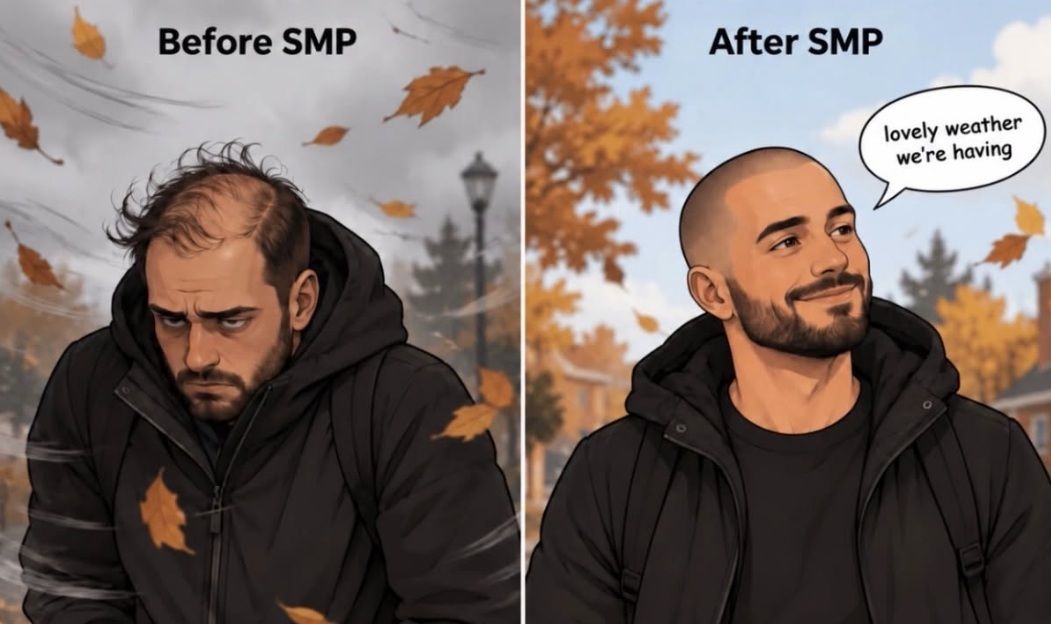
On the other hand, if your hair is falling out due to genetics or age and you want to cover up a bald spot or you want thicker hair but don’t know where to turn next, try SMP Ink . We are experts in Scalp Micropigmentation and can have your hair looking thicker in one treatment. No drugs, no surgeries, and no worries about it falling out afterward. Contact SMP Ink today!