
Different Types of Alopecia
Alopecia is an umbrella term for varying conditions characterized by hair loss. Alopecia is not contagious, though it can indicate underlying health problems. The most common type is Alopecia Areata, but different kinds of Alopecia show other signs and varying levels of hair loss.
Common Types of Alopecia
Alopecia Areata
This autoimmune condition causes the body’s immune system to attack hair follicles, leading to hair loss all over the scalp, but it can occur in other parts of the body. Alopecia Areata can affect all ages and genders, although it is most prevalent in teens and young adults. What triggers Alopecia Areata is unknown, and there is currently no cure. Still, various treatment options can help with regrowth depending on the severity of the condition.
Alopecia Barbae
Barbae is a localized form of Alopecia that affects the area of your beard. While it’s not as extreme as other forms of Alopecia, it still results in sporadic hair loss. Bald patches occur in small circular patches about the size of a quarter. As more hair is lost, these circles will sometimes begin to overlap. Your skin may feel itchy before you lose hair; some people experience irritation and inflammation within the bald spots. Historically, Alopecia Barbae tends to correlate with psychological and physical stress. Managing stress levels can help hair regrowth; here are some easy ways to relieve stress: Stress Management
Traction Alopecia
Hair pulled back very often and tightly can cause stress on the hair follicles by pulling the hair from the roots on your scalp. It’s best to lessen the tension exerted on your scalp and opt for a gentler hairstyle. Traction Alopecia can occur if you:
- Wear tight buns and ponytails (common among female military members)
- Have very long hair, adding extra weight to your scalp
- Wear cornrows or tight braids
Telogen Effluvium
This condition is usually triggered by stages of stress or trauma such as childbirth or severe illness and results in 30% or more of your scalp shifting into the telogen (shedding) phase. Telogen Effluvium is typically temporary, so hair growth is expected. There are a few potential causes of Telogen Effluvium:
- Medications or medical treatments: Some antidepressants and other medicines, like oral contraceptives, may cause hair loss. It might be worth speaking to your doctor if you started a new medication before experiencing hair loss.
- Environmental: Physical trauma like being in a car crash or having surgery might trigger TE. The “shock” of the environmental change causes your hair follicles to go into a resting state.
- Hormones: Experiencing a sudden change in hormone levels can trigger TE hair loss. Like environmental changes, hormone fluctuation can cause hair follicles to go into a prolonged resting state.
- Diet:
Some researchers believe hair loss may result from vitamin and nutrient deficiencies. Deficiencies of the following may impact hair growth:
- Vitamin B12
- Vitamin B6
- Zinc
- Iron
Androgenetic Alopecia
It is also known as male-pattern baldness, often resulting in a receding hairline and thinning crown. Women tend to experience overall hair thinning but are rarely left entirely bald. Androgenetic Alopecia doesn’t have a cure and progresses slowly over several decades. In men, hair is lost in a well-defined pattern that starts above the temples, and the hairline recedes to an “M” shape.
Rarer Types of Alopecia
- Frontal Fibrosing Alopecia is characterized by hair loss and scarring on the scalp near the forehead. Around half the people affected by FFA also experience a loss of eyebrows and sometimes eyelashes.
- Alopecia Universalis is the most advanced form of Alopecia Areata. It usually presents itself later in life and occurs in both men and women. This condition results in total hair loss all over the entire body.
- Cicatricial Alopecia causes not only permanent hair loss but also scarring of the scalp. CA is usually brought upon by rare disorders that destroy hair follicles.
- Anagen Effluvium is typically caused by cancer treatment medications, resulting in patchy hair loss and, eventually, total hair loss. It usually grows back after treatment is finished.
- Alopecia Totalis is a more advanced form of alopecia areata that causes hair loss on the face and entire scalp and occurs in both men and women. The chances of Alopecia Areata resolving itself after reaching the Totalis stage are small.
SMP INK Can Help!
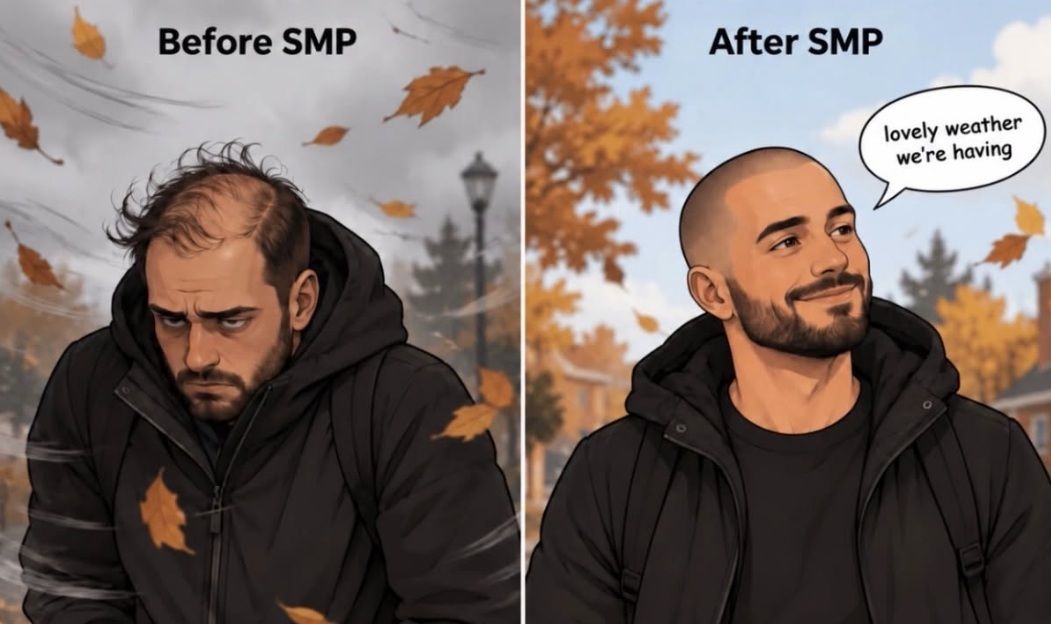
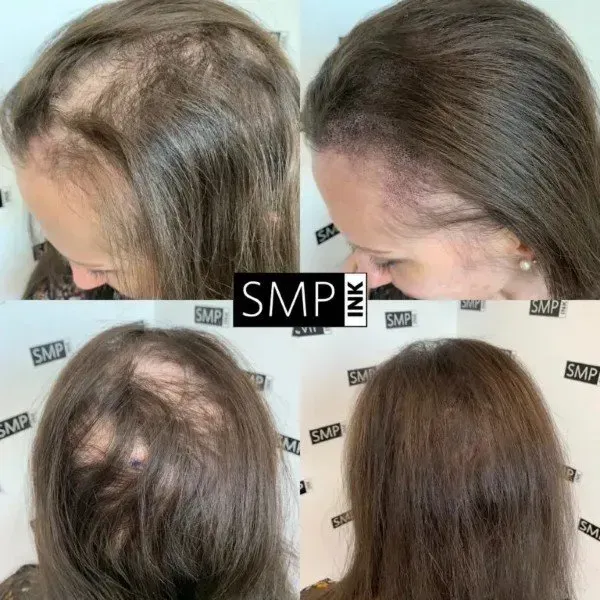
If your doctor and dermatologist have done everything they can to try and treat your hair loss caused by a form of Alopecia, scalp micropigmentation may be right for you! Our experienced technicians can recreate hairlines and add density to remaining hair to give the illusion of a fuller head of hair, so don’t hesitate to call us for a free consultation to regain your confidence today!