

Why Does My Hair Fall Out While Washing?

shiftframe • February 6, 2020

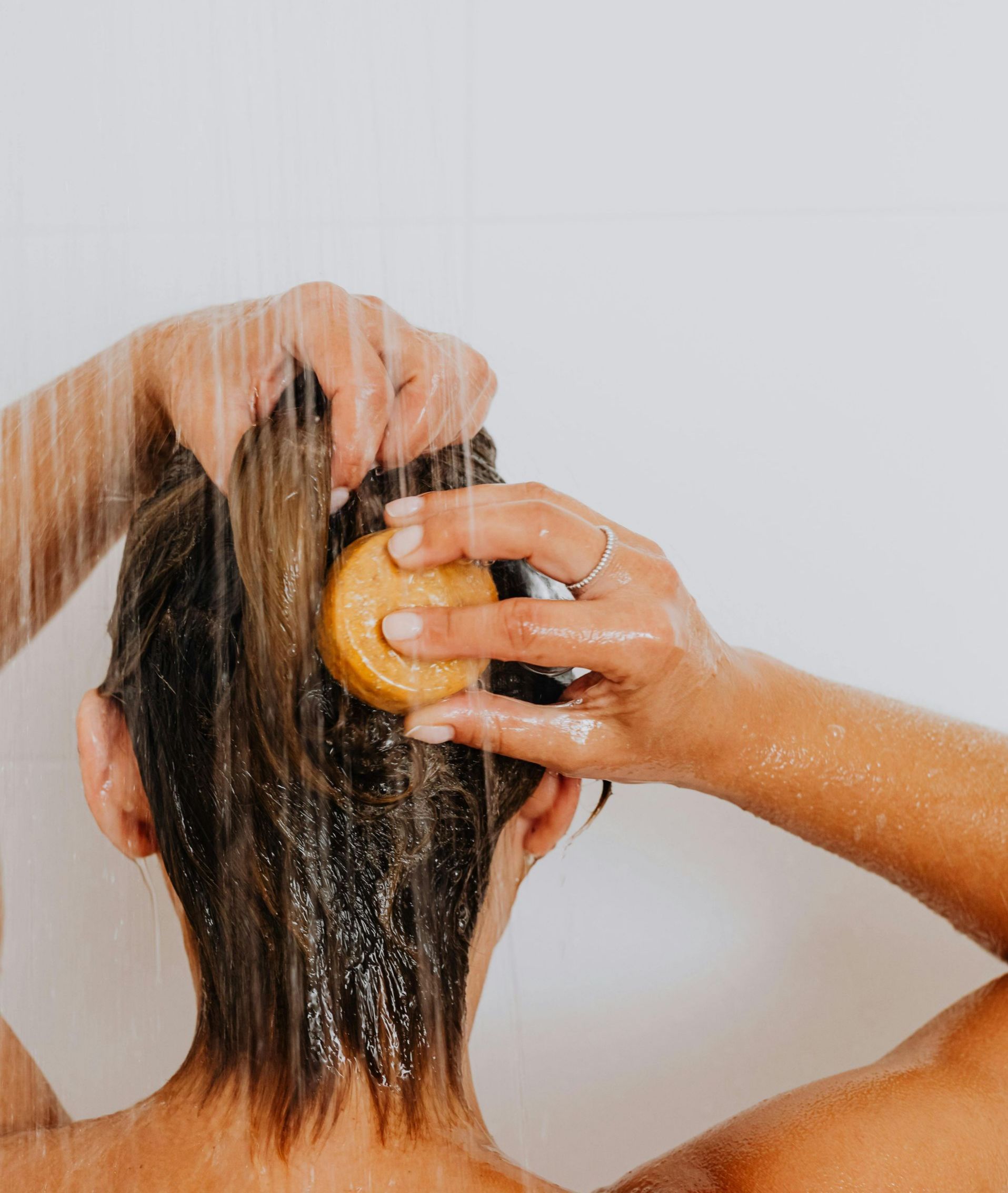
We’ve all been there – absentmindedly running fingers through our hair or just showering as per usual. As if prompted by nothing at all – those pesky strands of hair decide to come loose in your hand. 1 or 2, 5 or 6 – at some point, you can’t keep track. Everyone sheds hair, not entirely unlike a household pet would. Rationalizing it doesn’t explain away anything, though – just why does your hair fall out periodically?
Hair’s Natural Life Cycle

Hair’s life begins under the skin at the follicles or “roots” underneath your skin. Every single hair is planted firmly in a follicle, and every follicle has a blood vessel deeper under your skin. It’s there that the roots get the nutrients they need to start growing hair! Our biology doesn’t keep the hair growing nonstop like fingernails, though. The hair follows a set of “phases” it goes through.

Anagen (Growth)

The growth phase of the hair is when it is the most active, and this phase lasts the longest. During this process, blood vessels are actively feeding the follicle and creating new hair. During this phase, hair grows (on average) about a centimeter a month. This phase is capable of lasting years at a time, and the length of anage n will correlate to your hair’s maximum length. The hair on the rest of your body is very different – only having an anagen phase of 30-45 days. 

Your hair spends about 90% of its time in this phase – giving the impression of continually growing. However, the body has adapted the need for hair to stop growing and begin anew now and again. Whether this is for cleaning purposes or to prevent overworking the cells is unclear, but it serves its purpose regardless.

Catagen

This is the phase in-between “growing” and “resting.” As such, the catagen phase is characterized by hair growth slowing to a halt, and preparation processes taking place. The outer sheath (where hair meets to the root) adheres to the hair and follows it out of the scalp. This results in the “club hair”, including the small white bulb on the end of old hair. 

Between this phase and the next, the hair is not rooted in the scalp by any means. From even the smallest stimuli like walking, showering, or absentminded hair touching, they can fall out. 

Telogen

The resting phase of the hair does exactly what it says on the box. No hair growth, no gland activity, no blood flow to the root, and it waits until it’s time to grow the next hair. The length of this phase, again, is entirely variable. On average, though, it’s expected to last 100 days – but there’s no reason to fret! Compared to the length of time the hair is in anagen, telogen lasts about 1/20 of the time. Only 6-8 percent of your hair is in this phase at any given time, and the rest is still growing! 

As the hair falls out during this or the last stage, though, it’s easy to stress and worry about the amount falling out. In truth, even 100 hairs falling out daily is a reasonable amount! Hair sheds and regrows with time, but the worrying voice inside of you can easily rationalize that as “going bald.” With time, though, the hair will grow back, and you won’t even notice.

Hair Loss Doesn’t Have to Be That Bad!

Hair loss happens naturally, and it can be triggered by several outside factors, too. Age, illness, medications, stress – you name it. The hair on your head, as hale and hearty as it seems, can be fragile under the right circumstances. For some people, hair is a lot less kind than it is to others – but thin/weak hair doesn’t mean your look has to suffer! SMP Ink offers scalp micropigmentation treatments to touch up your hair and keep it squared away! Check out our line of services, and contact us today for a consultation!

 

By Marvin Furrow • September 26, 2026
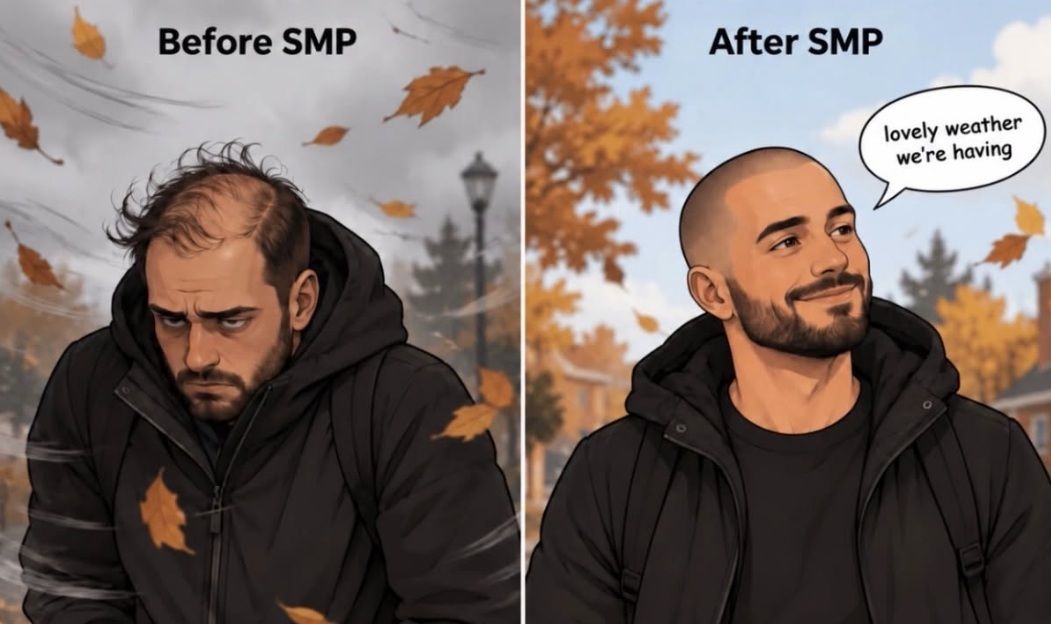
Can Scalp Micropigmentation Fix a Bad Hair Transplant? A hair transplant can be life-changing when it goes well. But sometimes the final result still leaves visible scars, thin areas, or uneven density. Scalp micropigmentation (SMP) can help improve the appearance of many hair transplant concerns by adding realistic pigment impressions that blend with your existing hair and reduce the contrast between the scalp and surrounding follicles. SMP does not regrow hair or physically repair a transplant. Instead, it can make certain problem areas look fuller, more balanced, and less noticeable. SMP for Low-Density Hair Transplants One of the most common concerns after a hair transplant is that the result still looks thin. Even when transplanted hair grows successfully, there may not be enough density to fully hide the scalp, especially under bright lighting or around the crown. SMP can be placed between existing hairs to reduce visible scalp and create the appearance of greater density. This is often called density SMP and can work well alongside both natural and transplanted hair. Can SMP Hide FUE and FUT Scars? Hair transplant procedures can leave different types of scarring. FUE procedures may leave small dot-like scars throughout the donor area, while FUT procedures can leave a more noticeable linear scar across the back of the scalp. SMP can help camouflage both by blending pigment into the surrounding area and reducing the contrast between scar tissue and the scalp. The scar itself does not disappear, but it can become much less noticeable, particularly with shorter hairstyles. Improving Uneven Donor Areas Some people are left with patchy or overharvested donor areas after a hair transplant. When too much scalp becomes visible between the remaining hairs, SMP can help create a more consistent appearance throughout the area. By adding follicle-like impressions where density is lacking, SMP can make the donor area look more balanced without another surgical procedure. Can SMP Improve an Unnatural Hairline? In some cases, yes. If the hairline looks thin , inconsistent, or lacks density, SMP can help soften the transition and create a fuller appearance. However, SMP cannot reposition transplanted hairs or change the direction they grow. If the issue is related to the placement of the grafts themselves, surgical correction may still be needed. SMP and Hair Transplants Can Work Together A hair transplant and SMP do two different things. A hair transplant adds real, growing hair. SMP helps create the appearance of additional density underneath and around that hair. For some people, using both treatments can create a more complete result than either one alone. SMP may also be used specifically to improve donor scars or areas where the scalp still shows through after a transplant. When SMP May Be a Good Option SMP may be worth considering if your hair transplant has left you with: Visible FUE scars An FUT strip scar Thin or low-density areas Patchy donor areas Visible scalp between transplanted hairs An uneven overall appearance The scalp should be fully healed before SMP is performed, particularly following a recent transplant. Hair Transplant SMP in Scottsdale, Arizona Every hair transplant result is different. At SMP INK AZ , we use scalp micropigmentation to help blend visible scars, improve the appearance of thinning areas, and create a more consistent look across the scalp. If you're unhappy with the appearance of a previous hair transplant, schedule a consultation with SMP INK AZ in Scottsdale to find out whether SMP can help improve your result.
marrvin furrow smp ink az owner and Mr. Universe
By Marvin Furrow • June 21, 2026
Considering SMP in Scottsdale? See why scalp micropigmentation is a low maintenance option for thinning hair, shaved styles, and summer confidence.