
Understanding Male Pattern Baldness
Male pattern baldness is what seems like the inevitable end of an otherwise robust and charming hairline for men everywhere. The onset of old age leads to hair turning gray, thinning out, and eventually leading to those same patterns. Some cover it up, comb over it, and otherwise hide the fact. Others will take it in stride and live with their new look. In the interest of knowing what to expect, though, male pattern baldness is easy to explain. Know the causes and forms of hair loss before it happens!

What Causes Male Pattern Baldness?
Male pattern baldness, primarily, is attributed to aging. However, explaining it away as just that isn’t telling the full story. Essentially, the hairs on your head start at the follicle, deeper down in the scalp. There, they produce your hair from keratin and old cells, pushing out new hair not dissimilar to a biological 3D printer. On a biological level, your hair isn’t always slowly growing – it goes through 4 phases of growth (anagen, catagen, telogen, and exogen). They boil down to a growing phase, shrinking transitional phase, resting phase, and then shedding phase. As time goes on, the anagen (growing) phase of hair production gradually gets shorter and shorter – meaning hair will go through the process of falling out and starting anew more and more frequently. Eventually, the anagen phase will stop altogether and will result in baldness in that area.
The gene for male pattern baldness starting is carried on the X chromosome, meaning you inherit it from your mother’s side of the family. While male pattern baldness happens naturally through age and genetics, it can also begin as a result of disease or medication. Steroids and thyroid conditions are the most common from these lists because they increase the amount of androgen in the body. Androgen is a sex hormone similar to testosterone, and excess amounts will speed the process of hair loss along significantly.
What to Do About Pattern Baldness Starting
By the time the hairline is getting pushed back, and the telltale spot is forming on the crown of the head, it’s not going to stop. Tactics to dealing with hair loss revolve around prevention and slowing the process – there is no way to reverse its onset. Thankfully, if hair loss is a result of disease or treatment, your hairline may return afterward.
Before your hair begins to go, you can take care of your hair and give it what it needs to stay healthy and robust, hopefully delaying the onset of male pattern baldness. Protein and biotin are nutrients required for the body to make healthy hair, and incorporating them into your diet is never a wrong solution. Eggs, spinach, yogurt, avocados, salmon, and nuts are high in both. Another way to reduce hair loss is to reduce stress in your life – stress will age your body in many ways.
If prevention is out of the question, though, dealing with your hair loss is the next best option. As mentioned earlier, different men will take different avenues to handle their hair loss , and many men will accept their lack of hair for what it is. Sometimes, a wig or hairpiece is sufficient, or maybe a choice of a hat will take its place. For men who aren’t willing to let their natural hair go, though, there are prescriptions available to re-stimulate the hair follicles and promote growth once more. Your doctor can prescribe minoxidil, sold under the brand name Rogaine. Alternatively, a doctor can give a hair transplant – removing hair follicles from healthy areas and re-applying them to the sites of thinning or balding. This type of procedure is the most invasive, of course – requiring surgery that can result in scarring, scabbing, and rejection.
A New Option for Hair Loss
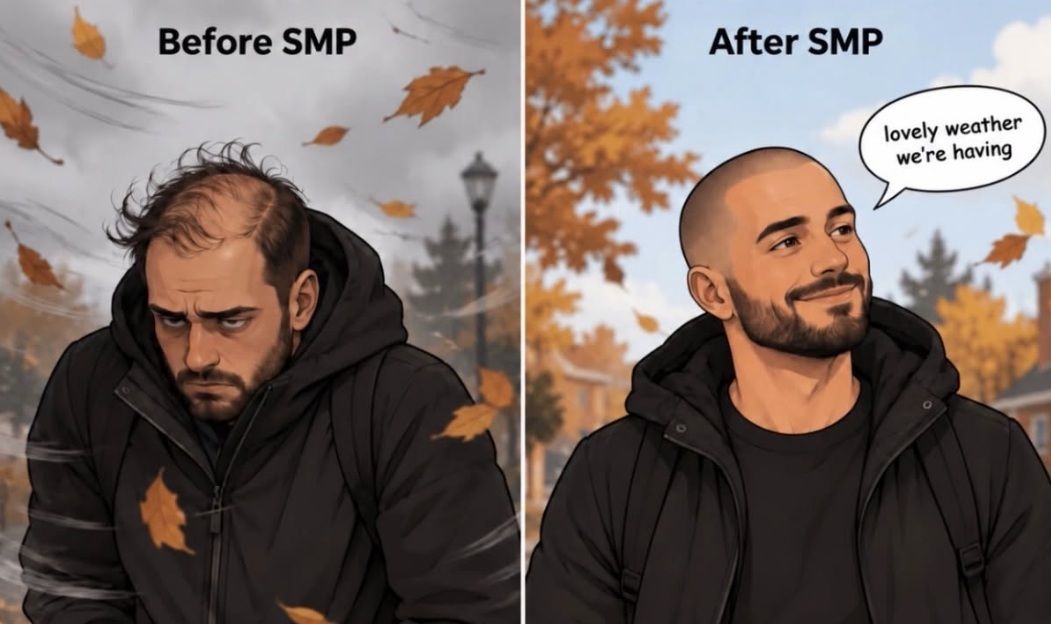
For a hair loss solution that looks natural, is minimally invasive, and is guaranteed to last, scalp micropigmentation is your best option. SMP Ink can give you the best looking and least expensive option for taking the unsightliness out of bald spots and restoring the natural-looking thickness of your hair. Scalp micropigmentation is quick, easy, and long-lasting – contact us today if you want to learn more or book an appointment!