
Why Do Men Go Bald?
Are you noticing that you’re losing more strands of hair than normal? You’re not alone; approximately two-thirds of men will go through some degree of hair loss by the age of 35, according to data from the American Academy of Family Practice . And more than 80% of men will deal with hair loss before the age of 50.
Hair loss and thinning can be caused by stress in both your personal and work life. Also, certain drugs and medicines can cause an abundance of shedding, that will worsen male pattern baldness. The majority of the time, hair loss is a result of genetics or hormones.
So if you’re noticing that you’re losing more hair than normal, it's time to take a look at some of the most common causes of hair loss.

Stress
Stress can be a serious health problem that affects not only your immune system but also the thickness of your hair. If you’ve been stressing at work trying to meet deadlines, this may have a negative effect on your hairline.
The stress doesn’t just have to be work-related, it can also be related to your personal life. Stress may lead to at least three different types of hair loss including alopecia areata, trichotillomania and telogen effluvium.
Alopecia areata is an immune condition where your immune system attacks your hair follicles. This results in rapid hair loss that may sometimes regrow, but not always. This may also cause hair at the back of your head to thin and fall out. Alopecia is rare and often accompanied by a lot of stress. This doesn’t mean a few stressful days will cause alopecia, but long exposure to stress may trigger this immune condition.
Trichotillomania is known as the hair-pulling disorder. People who suffer from this disorder have a strong urge to pull out their own hair. This results in patches of hair loss on the body and scalp.
Telogen effluvium results in your hair follicles going into a resting phase. Your hair follicles enter this resting phase as a result of your body’s level of stress hormones. Meaning, your hair won’t fall out right away, but as your stress hormones increase, your hair will begin to fall out while brushing or washing.
The best solution is to try and reduce your stress levels either by changing up your lifestyle, going to therapy, or using medications.
Diet
If genetics or over-stressing isn’t the cause of your hair loss, then your diet might be. Diets that are low in vitamins and minerals can cause your hair to shed. An iron deficiency can also contribute to a low hair growth trait that is present in rats and believed to be shared by humans.
Although research has not come up with the perfect diet to support hair loss, diets that are rich in protein, zinc, iron, omega 3 fatty acids, and selenium, can help you with growing a full healthy head of hair. Taking vitamin supplements can also help you with hair growth.
Genetics
The majority of male pattern baldness comes from genetics. Primarily it’s the amount of male hormones your body produces and how your hair responds to those levels. Male pattern baldness (androgenic alopecia), is something all men will experience.
Sometimes hair loss can be due to post-pubertal hairline recession. This will happen in men in their early 20’s and differs from male pattern baldness. Post pubertal hairline recession will only affect your hairline and most of the time isn’t something to worry about.
Male pattern baldness is a hormonal and genetic case. In some people, their hair follicles will be sensitive to dihydrotestosterone, a male hormone. DHT is a naturally occurring male steroid hormone. Men that are sensitive to DHT, normal amounts of the hormone can cause hair follicles to shrink and later on fail to grow. This will create a horseshoe-shaped hairline that is common in balding men.
Drugs
Drugs that increase levels of androgens and stress may occasionally cause hair loss. Over-the-counter drugs are unlikely to cause hair loss. Common prescription drugs may have a negative effect on your hair’s health and may result in temporary or permanent hair loss.
These drugs are:
- Antidepressants, this drug may cause stress-induced telogen effluvium.
- Thyroid medication, this drug may rarely cause diffuse hair loss.
- Retinoids, this drug is used to treat acne and skin issues and may cause hair loss.
- Steroids, testosterone, and steroids derived from testosterone, can turn into DHT.
If you think your prescription medication has an effect on your hair, it’s best to call your doctor to talk about better alternatives.
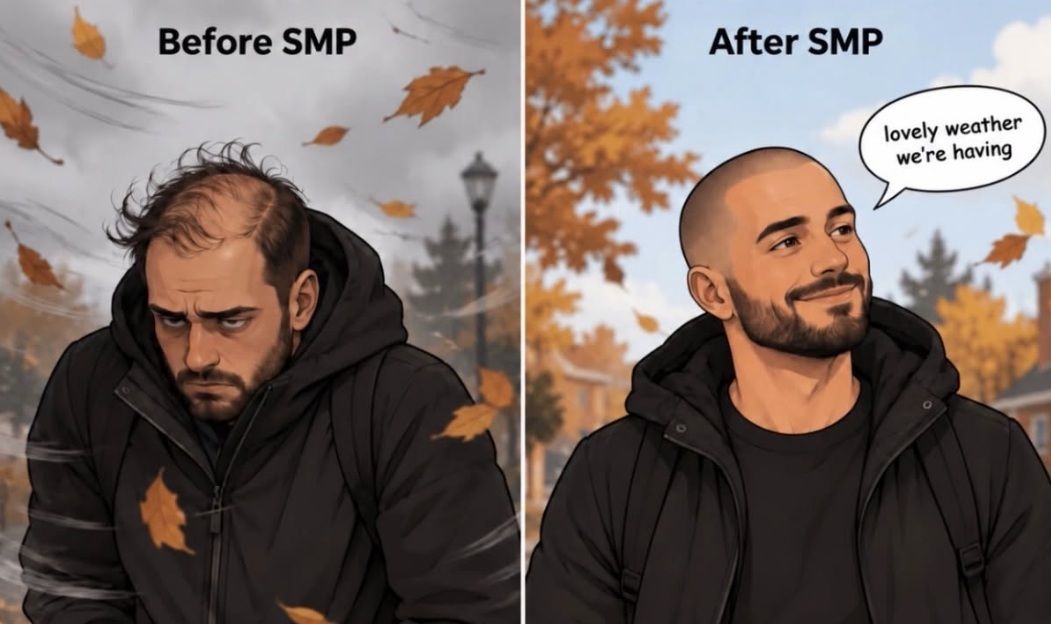
You Don’t Have to Be Bald!
The experts at SMP Ink can hook you up with a new hairline and a new hairstyle with scalp micropigmentation . SMP is a safe, non-surgical, advanced hair restoration technique. We can have you feeling brand new and confident with your new look! Don’t let male pattern baldness get you down, call us today!