

Scalp Micropigmentation VS Traditional Tattoos

shiftframe • September 18, 2023

People often refer to scalp micropigmentation as “hair tattoos.” It’s a great, two-word explanation of scalp micropigmentation, but you may need to give a better impression of scalp micropigmentation. Traditional tattoos are similar to SMP but have a few significant differences. Here are a few other differences between traditional tattoos and scalp micropigmentation.
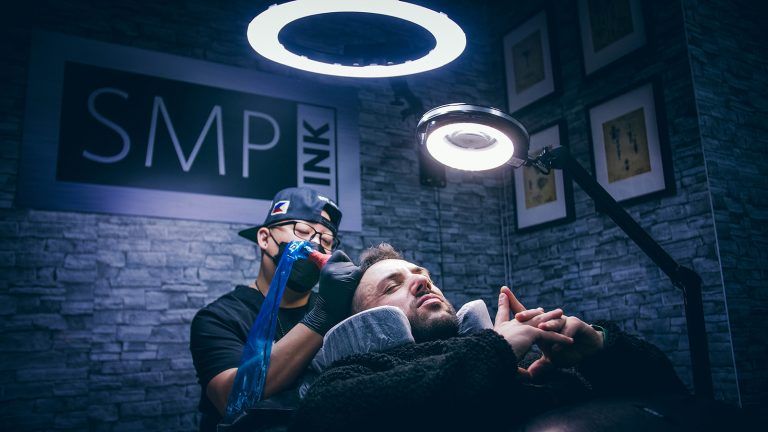
The Needles

One significant difference between traditional tattoos and scalp micropigmentation is the needles used. The needle used for scalp micropigmentation is called a “3-point-microneedle,” and it’s 75% smaller than a traditional tattoo artist’s smallest needle! The idea is to replicate the look of a tiny follicle with a microneedle that hurts less and prevents ink from spreading from the pore.

The Pigment

Another significant difference is the ink used. Tattoo artists typically use iron oxide-based pigment that has a variety of colors. SMP ink is an organic, carbon-based ink that sticks to natural colors to match skin tones and natural hair colors. SMP pigment stays the same without separating like traditional ink. Still, because SMP pigment is so close to the surface, it is more vulnerable to UV rays.

Pigments used in scalp micropigmentation are specially blended to match the client’s desired hue, which may be influenced by skin tone, eyebrow hair color, and facial hair. Unlike tattoo ink, SMP ink has low amounts of heavy metal content, and it won’t separate into blues and greens over time.

The Process

SMP artists place the pigment in the upper dermis, while traditional tattoo artists apply the ink to the middle layer. The upper dermis is sensitive to scarring, so the needle must be small enough to compliment the size of the hair follicles. Traditional tattooing uses a scraping method to create intricate designs, while scalp micropigmentation uses a dotting or pointillism method where the technician places tiny dots into the skin. There is less contact with the needle and less pressure applied to the scalp to avoid a blowout. Blowout refers to ink spreading under the skin’s surface after being applied.

Getting a traditional tattoo is often a singular experience. You go in, discuss designs, and the artist creates an illustration you like, and then you get tattooed. SMP is considered a more clinical procedure. SMP requires preparation before the treatment and particular post-treatment steps to heal correctly. You can often have a traditional tattoo done in one session unless it’s a larger piece, while SMP can take as many as four sessions to be completed.

A Couple More Things…

  • Pain is significantly different as well. Because SMP pigment doesn’t go very deep into the skin, it causes less pain for the person, while traditional tattoos tend to be pretty painful since they go deeper. Everyone’s pain tolerance is different, so keep that in mind.
  • Traditional tattoos are often done to meet an aesthetic or memorialize someone or something. At the same time, SMP serves a more practical purpose by creating a new hairline for people who experience hair loss.
  • Tattoo artists are not SMP technicians! They are too different in important ways, so tattoo artists should only cross over if they have an SMP certification.

Get Your Hair Tattoo Today!

SMP INK is full of scalp micropigmentation experts ready to help change your life! Our technicians are experienced, knowledgeable, and professional, and we trust them to restore your confidence! Don’t wait; book a free consultation today!
By Marvin Furrow • September 26, 2026
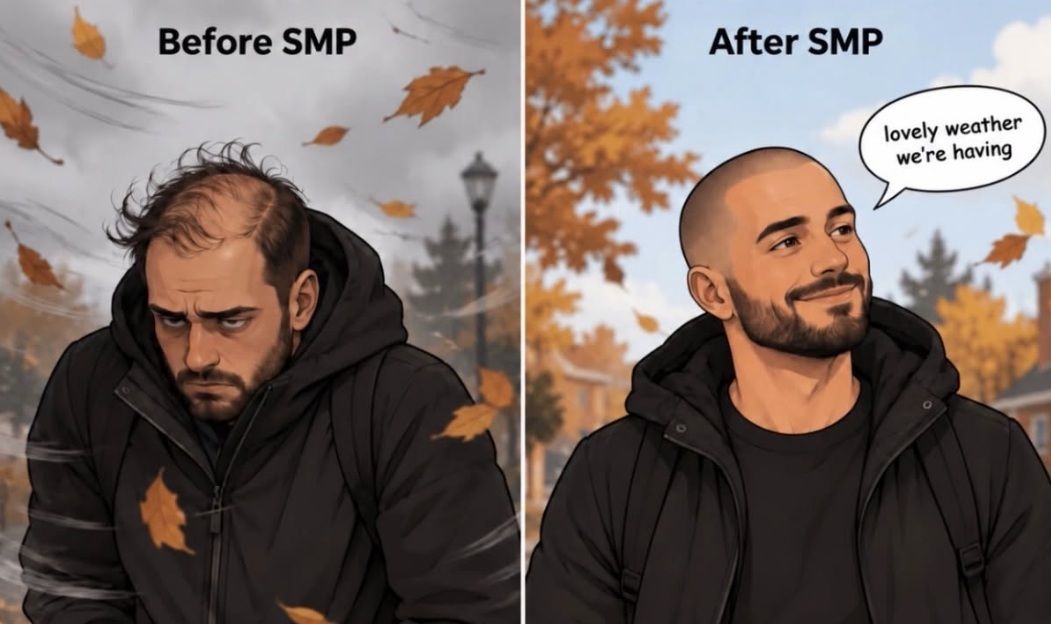
Can Scalp Micropigmentation Fix a Bad Hair Transplant? A hair transplant can be life-changing when it goes well. But sometimes the final result still leaves visible scars, thin areas, or uneven density. Scalp micropigmentation (SMP) can help improve the appearance of many hair transplant concerns by adding realistic pigment impressions that blend with your existing hair and reduce the contrast between the scalp and surrounding follicles. SMP does not regrow hair or physically repair a transplant. Instead, it can make certain problem areas look fuller, more balanced, and less noticeable. SMP for Low-Density Hair Transplants One of the most common concerns after a hair transplant is that the result still looks thin. Even when transplanted hair grows successfully, there may not be enough density to fully hide the scalp, especially under bright lighting or around the crown. SMP can be placed between existing hairs to reduce visible scalp and create the appearance of greater density. This is often called density SMP and can work well alongside both natural and transplanted hair. Can SMP Hide FUE and FUT Scars? Hair transplant procedures can leave different types of scarring. FUE procedures may leave small dot-like scars throughout the donor area, while FUT procedures can leave a more noticeable linear scar across the back of the scalp. SMP can help camouflage both by blending pigment into the surrounding area and reducing the contrast between scar tissue and the scalp. The scar itself does not disappear, but it can become much less noticeable, particularly with shorter hairstyles. Improving Uneven Donor Areas Some people are left with patchy or overharvested donor areas after a hair transplant. When too much scalp becomes visible between the remaining hairs, SMP can help create a more consistent appearance throughout the area. By adding follicle-like impressions where density is lacking, SMP can make the donor area look more balanced without another surgical procedure. Can SMP Improve an Unnatural Hairline? In some cases, yes. If the hairline looks thin , inconsistent, or lacks density, SMP can help soften the transition and create a fuller appearance. However, SMP cannot reposition transplanted hairs or change the direction they grow. If the issue is related to the placement of the grafts themselves, surgical correction may still be needed. SMP and Hair Transplants Can Work Together A hair transplant and SMP do two different things. A hair transplant adds real, growing hair. SMP helps create the appearance of additional density underneath and around that hair. For some people, using both treatments can create a more complete result than either one alone. SMP may also be used specifically to improve donor scars or areas where the scalp still shows through after a transplant. When SMP May Be a Good Option SMP may be worth considering if your hair transplant has left you with: Visible FUE scars An FUT strip scar Thin or low-density areas Patchy donor areas Visible scalp between transplanted hairs An uneven overall appearance The scalp should be fully healed before SMP is performed, particularly following a recent transplant. Hair Transplant SMP in Scottsdale, Arizona Every hair transplant result is different. At SMP INK AZ , we use scalp micropigmentation to help blend visible scars, improve the appearance of thinning areas, and create a more consistent look across the scalp. If you're unhappy with the appearance of a previous hair transplant, schedule a consultation with SMP INK AZ in Scottsdale to find out whether SMP can help improve your result.
marrvin furrow smp ink az owner and Mr. Universe
By Marvin Furrow • June 21, 2026
Considering SMP in Scottsdale? See why scalp micropigmentation is a low maintenance option for thinning hair, shaved styles, and summer confidence.