

Hair Loss During Pregnancy: What to Know

postlaunch • January 28, 2025

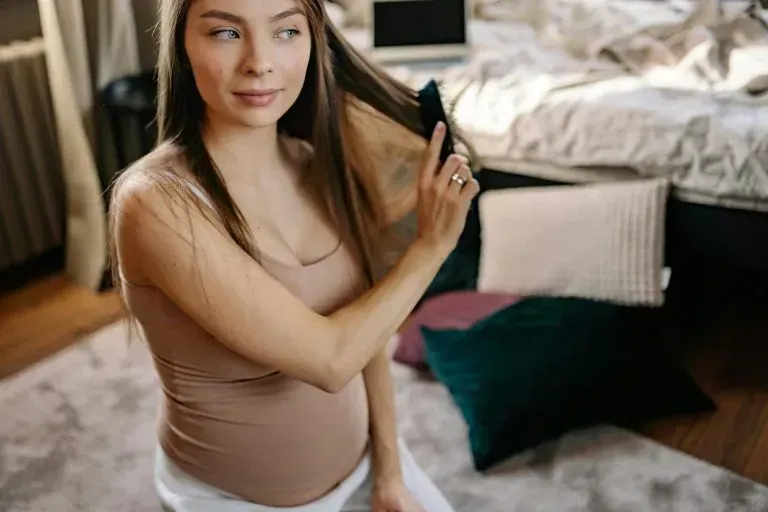
You may have heard that hair becomes thick and lustrous during pregnancy, but this is only true for some women, thanks to high estrogen levels. Many moms-to-be experience hair loss during pregnancy for various reasons.
Common Causes of Pregnancy-Related Hair Loss

Hormonal Shift

Some women may experience hair thinning and shedding due to stress or shock. This condition is called Telogen Effluvium and affects a small percentage of women during pregnancy. The first trimester may stress the body as the balance of hormones shifts dramatically to support the growing baby. Stress may put 30% or more of the hairs on your head into the telogen or “resting” phase of the hair life cycle. So, instead of losing the average 100 hairs a day, you may lose 300 hairs a day.

Thyroid disorders like hyperthyroidism and hypothyroidism may be difficult to spot during pregnancy. Of the two conditions, hypothyroidism is more common, affecting around 2 or 3 out of 100 pregnant women . Hair loss is one symptom, along with muscle cramps, constipation, and exhaustion. Additionally, around 1 in 20 women experience thyroid problems after the baby is born.

Iron deficiency occurs when the body doesn’t have enough red blood cells to transport oxygen to different tissues. It can cause hair thinning and other symptoms like fatigue, irregular heartbeat, and headaches. Pregnant women are at a heightened risk of developing iron deficiency, especially if their pregnancies are spaced close together, they’re pregnant with multiple babies, or they have severe morning sickness.

It’s important to note that telogen effluvium is typically uniform thinning, but other issues may be at play if you notice patches or more dramatic balding. Various genetic and autoimmune conditions, such as multiple types of alopecia, may be causing your hair loss, which you can learn more about in depth in our blog, Different Types of Alopecia.

Many women experience hair loss within a few months of delivery, generally peaking around four months postpartum. While it may seem like hair loss, it’s actually “excessive hair shedding” caused by a drop in estrogen levels. While seeing 300+ hair shedding daily may be jarring, it typically resolves independently without treatment.

Treatment and Prevention

You may or may not be able to prevent hair loss or shedding during pregnancy as it depends on what is the root cause of the hair loss, but you can try:

  • Eating a balanced diet, focusing on protein, iron, and other essential nutrients.
  • Ask your doctor if any medications or supplements are contributing to hair loss.
  • Skipping tight hairstyles that may pull your hair.
  • Gently wash your hair and use a wide-toothed comb to avoid pulling too hard while detangling.

Hair loss during and after pregnancy may require no special treatment. It generally resolves on its own over time. Topical drugs like minoxidil (Rogaine) aren’t safe to use during pregnancy or while breastfeeding but may be used after you finish nursing. In the case of conditions like hypothyroidism and iron deficiency, working with your doctor to find medication or vitamin supplements that will return your levels to normal should help start the regrowth cycle. Talking to your doctor should be the first step to determining and resolving your hair loss problems during pregnancy.

Hair Loss Solutions at SMP INK

While scalp micropigmentation treatment is NOT recommended while pregnant or nursing, you can look to SMP in the future if your hair loss does not resolve on its own, our qualified team at SMP INK has helped many women feel confident again by giving them a permanent, non-invasive solution to hair loss. When you’re ready postpartum, book a FREE consultation with SMP INK today!

By Marvin Furrow • September 26, 2026
Can Scalp Micropigmentation Fix a Bad Hair Transplant? A hair transplant can be life-changing when it goes well. But sometimes the final result still leaves visible scars, thin areas, or uneven density. Scalp micropigmentation (SMP) can help improve the appearance of many hair transplant concerns by adding realistic pigment impressions that blend with your existing hair and reduce the contrast between the scalp and surrounding follicles. SMP does not regrow hair or physically repair a transplant. Instead, it can make certain problem areas look fuller, more balanced, and less noticeable. SMP for Low-Density Hair Transplants One of the most common concerns after a hair transplant is that the result still looks thin. Even when transplanted hair grows successfully, there may not be enough density to fully hide the scalp, especially under bright lighting or around the crown. SMP can be placed between existing hairs to reduce visible scalp and create the appearance of greater density. This is often called density SMP and can work well alongside both natural and transplanted hair. Can SMP Hide FUE and FUT Scars? Hair transplant procedures can leave different types of scarring. FUE procedures may leave small dot-like scars throughout the donor area, while FUT procedures can leave a more noticeable linear scar across the back of the scalp. SMP can help camouflage both by blending pigment into the surrounding area and reducing the contrast between scar tissue and the scalp. The scar itself does not disappear, but it can become much less noticeable, particularly with shorter hairstyles. Improving Uneven Donor Areas Some people are left with patchy or overharvested donor areas after a hair transplant. When too much scalp becomes visible between the remaining hairs, SMP can help create a more consistent appearance throughout the area. By adding follicle-like impressions where density is lacking, SMP can make the donor area look more balanced without another surgical procedure. Can SMP Improve an Unnatural Hairline? In some cases, yes. If the hairline looks thin , inconsistent, or lacks density, SMP can help soften the transition and create a fuller appearance. However, SMP cannot reposition transplanted hairs or change the direction they grow. If the issue is related to the placement of the grafts themselves, surgical correction may still be needed. SMP and Hair Transplants Can Work Together A hair transplant and SMP do two different things. A hair transplant adds real, growing hair. SMP helps create the appearance of additional density underneath and around that hair. For some people, using both treatments can create a more complete result than either one alone. SMP may also be used specifically to improve donor scars or areas where the scalp still shows through after a transplant. When SMP May Be a Good Option SMP may be worth considering if your hair transplant has left you with: Visible FUE scars An FUT strip scar Thin or low-density areas Patchy donor areas Visible scalp between transplanted hairs An uneven overall appearance The scalp should be fully healed before SMP is performed, particularly following a recent transplant. Hair Transplant SMP in Scottsdale, Arizona Every hair transplant result is different. At SMP INK AZ , we use scalp micropigmentation to help blend visible scars, improve the appearance of thinning areas, and create a more consistent look across the scalp. If you're unhappy with the appearance of a previous hair transplant, schedule a consultation with SMP INK AZ in Scottsdale to find out whether SMP can help improve your result.
marrvin furrow smp ink az owner and Mr. Universe
By Marvin Furrow • June 21, 2026
Considering SMP in Scottsdale? See why scalp micropigmentation is a low maintenance option for thinning hair, shaved styles, and summer confidence.